Snippets.

// AI Briefing

March 27, 2026

AI Briefing

Today's AI landscape is split between humbling reality checks and bold power moves. A new benchmark just exposed that every frontier model, including GPT-5.4 and Claude Opus 4.6, scores below 1% on tasks humans ace effortlessly, while Mistral quietly dropped an open-source voice model that can clone your voice from three seconds of audio. Meanwhile, both the White House and EU are racing to shape the rules of the AI game before it gets away from them.

ARC-AGI-3 Humbles Every Frontier AI Model, Scoring Below 1% Where Humans Get 100%

ARC-AGI-3 Humbles Every Frontier AI Model, Scoring Below 1% Where Humans Get 100%

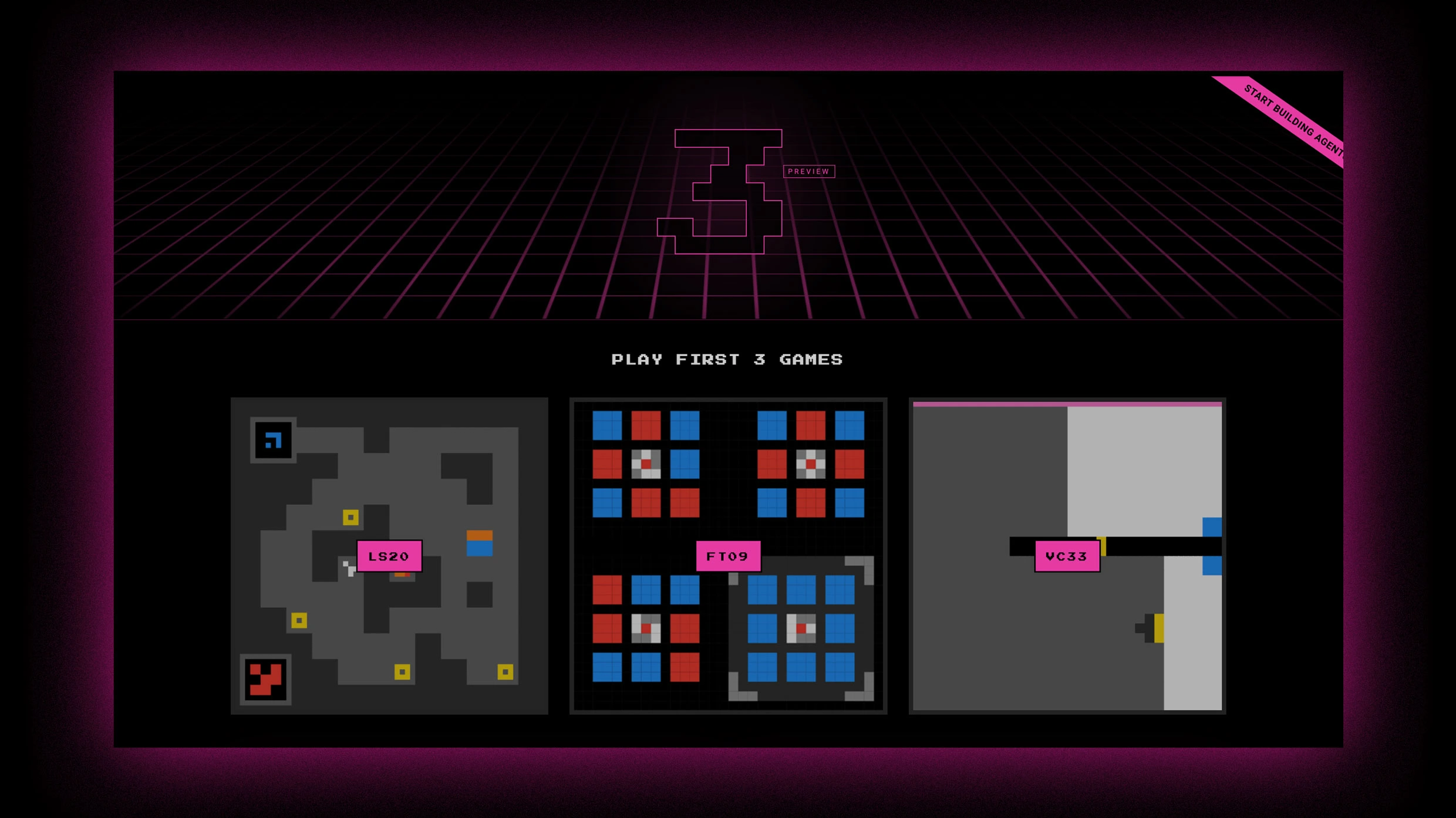
The ARC Prize Foundation launched ARC-AGI-3 on March 25, a new interactive benchmark that ditches static puzzles for turn-based games with no instructions and no stated goals. The results are striking: humans solve 100% of the environments while the best AI (Gemini 3.1 Pro) managed just 0.37%. GPT-5.4, Claude Opus 4.6, and Grok 4.2 all scored near zero. This benchmark measures something fundamentally different from previous tests, specifically the ability to explore, adapt, and learn on the fly, and it reveals a massive gap between pattern-matching at scale and genuine flexible reasoning.

Mistral Drops Voxtral TTS: A 4B-Parameter Open-Source Voice Model That Clones From 3 Seconds of Audio
02Open SourceTechCrunch

Mistral Drops Voxtral TTS: A 4B-Parameter Open-Source Voice Model That Clones From 3 Seconds of Audio

Mistral released Voxtral TTS on March 26, a lightweight 4-billion-parameter text-to-speech model that supports nine languages and can clone a voice from as little as three seconds of audio. The model achieves a time-to-first-audio of just 90 milliseconds and runs on consumer hardware, including laptops and mid-range GPUs. Available on Hugging Face under a Creative Commons license, it puts Mistral in direct competition with ElevenLabs and OpenAI's voice offerings, but with a fully open-weight approach that lets developers self-host and customize.

White House Unveils AI Policy Framework, Seeks to Preempt State-Level AI Laws

White House Unveils AI Policy Framework, Seeks to Preempt State-Level AI Laws

The Trump administration released a National Policy Framework for Artificial Intelligence on March 20, urging Congress to create federal AI legislation that would override state-level AI regulations. The framework takes a deliberately light-touch approach: no new federal AI agency, sector-specific oversight through existing regulators, and broad preemption of state laws deemed to impose "undue burdens" on AI development. It also takes a position on copyright, stating that training on copyrighted material doesn't violate copyright law, while recommending courts settle specific disputes.

EU Council Agrees to Delay High-Risk AI Rules, Adds Ban on AI-Generated Abuse Content

EU Council Agrees to Delay High-Risk AI Rules, Adds Ban on AI-Generated Abuse Content

On March 13, the EU Council agreed its negotiating position on streamlining the AI Act, pushing back deadlines for high-risk AI system compliance to December 2027 for standalone systems and August 2028 for products with embedded AI. The delay gives companies more time to prepare, but the Council also added teeth: a new prohibition on using AI to generate non-consensual sexual content and child abuse material. The position now heads to negotiations with the European Parliament, setting the stage for what could be the final shape of EU AI regulation.

Perplexity Launches 'Personal Computer,' an Always-On AI Agent Running on Your Mac Mini
05Product9to5Mac

Perplexity Launches 'Personal Computer,' an Always-On AI Agent Running on Your Mac Mini

Perplexity announced Personal Computer on March 11, a product that turns a dedicated Mac mini into an always-on AI agent that works across your local files, apps, and sessions 24/7. Instead of running AI through a browser tab, it puts an agent directly on your machine with access to your local system. Every sensitive action requires approval, every action is logged, and there's a kill switch. It is the clearest signal yet that AI companies see the future not in chat windows but in persistent agents that live on your hardware and act as a digital proxy.

Test Your Understanding

Quiz

1 / 8

What makes ARC-AGI-3 fundamentally different from previous AI benchmarks?

Let's talk on WhatsApp
Today's AI Briefing5 stories
May 8, 2026

Summary

Anthropic just quietly became the highest-revenue AI lab on the planet, hitting $30B ARR while spending a fraction of what OpenAI burns on training. Google is internally testing a 24/7 personal AI agent called Remy that can make purchases on your behalf, Nvidia bet half a billion on fiber optics with Corning to wire up the next wave of AI data centers, and Arm's earnings reveal that agentic AI is about to quadruple the CPU demand nobody saw coming. Oh, and Congress unanimously agreed on something for once: banning AI companions for kids.

Read full summary & take a quiz →

Top Stories

Anthropic Hits $30B ARR, Officially Surpasses OpenAI in Revenue While Spending 4x Less on Training

Google Internally Tests 'Remy,' a 24/7 Personal AI Agent That Can Make Purchases on Your Behalf

Nvidia Invests $500M in Corning, Plans 3 New US Factories and Up to $3.2B Total to Wire AI Data Centers with Fiber Optics

Senate Unanimously Advances GUARD Act to Ban AI Companion Chatbots for Minors, House Files Companion Bill

Arm Posts Record FY2026 Results, Launches AGI CPU as Agentic AI Set to Quadruple Data Center CPU Demand

9 quiz questions inside